Of Super Bowls and What-Not

•February 8, 2010 • 4 Comments

First, thanks so much for the encouraging comments – I’m inspired and humbled. It all helps and means more than just words. Thank you.

Soon I’ll post more about my accident. Guess I just don’t feel like digging into it yet. Perhaps after surgery – getting that dialed is my top priority right now, and today I have consults with two great surgeons. Unfortunately there’s no great accident story, and we can’t figure out exactly why I ended up with this horribly shattered leg. Maybe the lesson is, “Life is safer on the couch.” But that wouldn’t be life, now, would it?

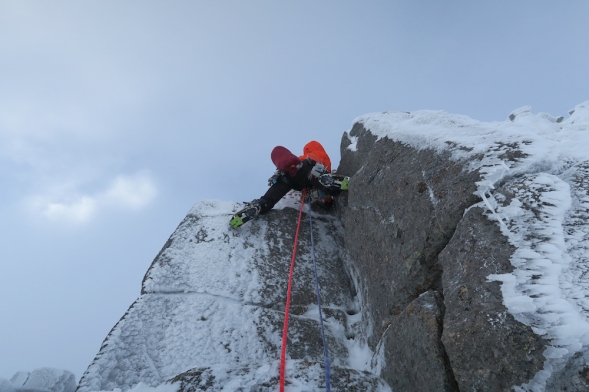
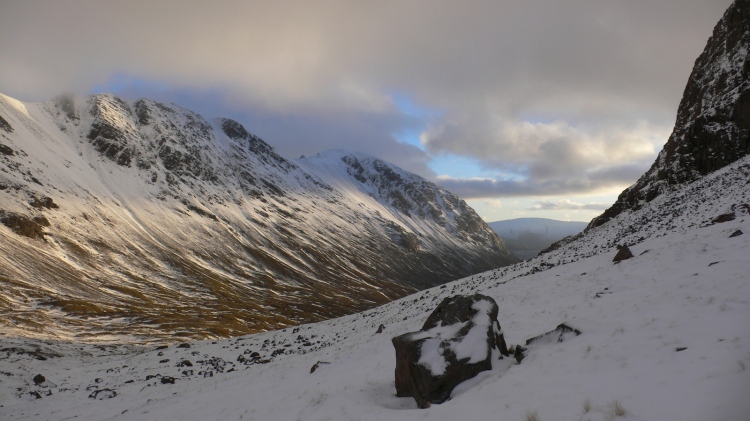
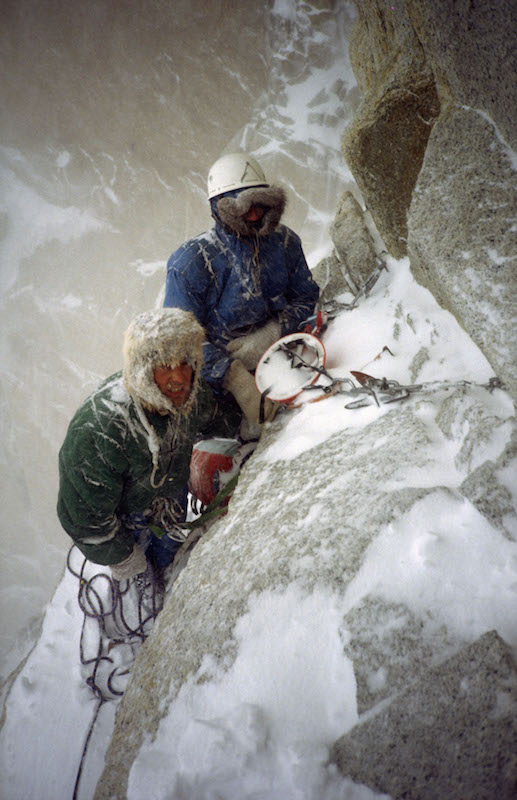
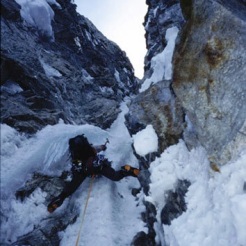
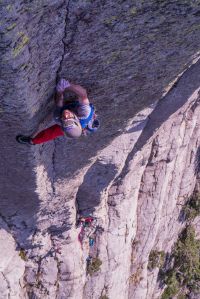
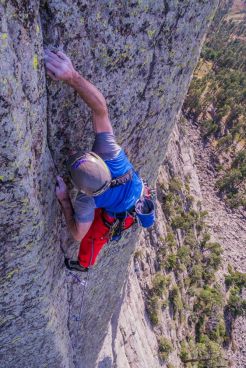
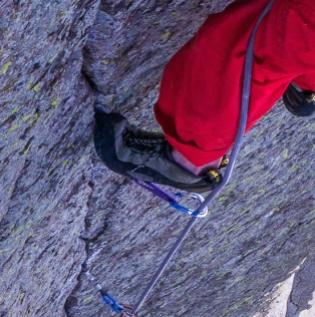
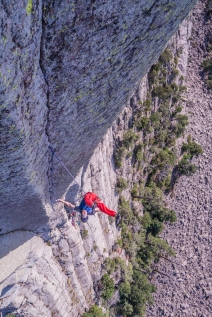
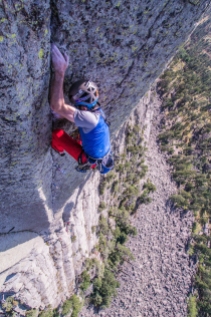
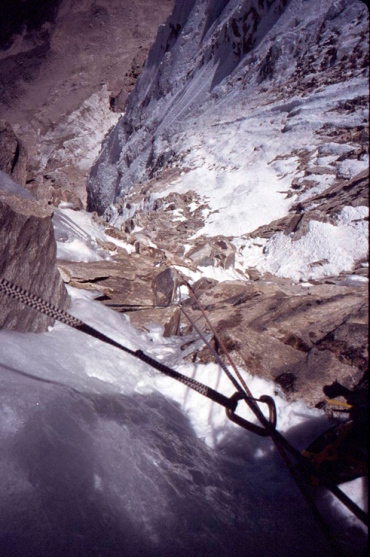
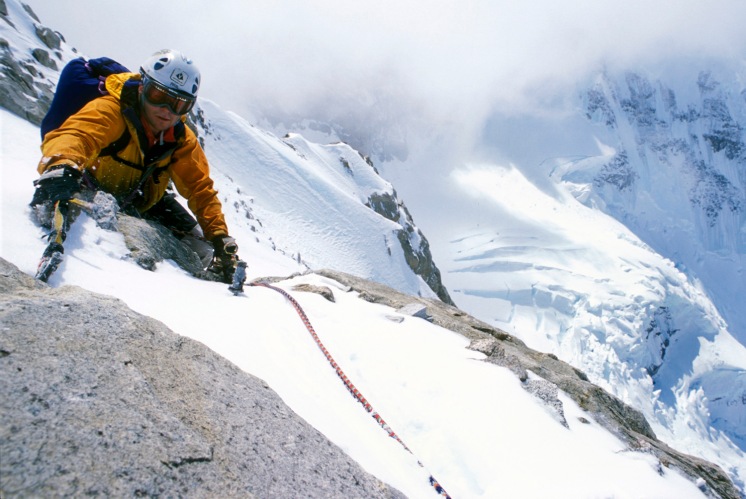
No food up there. But damn...The Black Canyon this past fall.

Speaking of the couch, little is more absurd than a bunch of grown men in what look like bad Halloween spaceman costumes chasing a funny-shaped ball around a painted rectangle, patting themselves on the asses, taunting one another, and wagging their tails in the end zones. Except, perhaps, the absurdity that a hundred thousand people pile into a stadium to spectate and millions more watch and shout and cheer and curse at their idiot boxes, while planted firmly on their duffs and glued to every move and jiggle as if it really means something. Actually, wait – something might be more absurd: climbing. No food up there. No reason to go. No extrinsic rewards. Potential to get bowed-up mightily. At least the football players get big bucks and hot cheerleaders.

Come to think of it, though, little of what we do actually makes sense. So what the hell. Super Bowl? Sure. I didn’t even know who was playing until we flipped on the tube here at Jenna’s (she gets free cable at her apartment….duuuude! I think I’ve got a new passion, and just in time. Recovery is gonna fly by!).

Spent what seems like half the day just getting my gimp ass in and out of the bathtub, making a meal, and doing things that normally take me five minutes. But that’s OK. Everybody goes through challenges, and challenges bring opportunities. Sometimes, though, the challenges are so tragic and overwhelming that I can’t comprehend it. The people of Haiti, the people of Pakistan in the harrowing earthquake of 2005, the broken down and destitute around the globe, and the devastation and neglect endured by the people of New Orleans with Hurricane Katrina. I’m so lucky.

The people of New Orleans struck me at a particular moment near the end of the game. The New Orleans Saints – I remember them being called “The Aints” because they’ve long been sooo bad – started the Super Bowl – their first ever – down 10 to 0. Well, heck, guys, you had a great season anyway and nobody thought you’d get this far… Whatever, I don’t even particularly like football. So the game went back and forth, with New Orleans going for it, taking chances, seemingly unafraid like someone – a person, a team, a city – with nothing left to lose, and they held a slim lead as their opponents, the Indianapolis Colts, drove downfield with a couple of minutes left. The Colts seemed to have the momentum as their star quarterback dropped back and threw a pass. Suddenly, from out of nowhere, a rocket-fast New Orleans defender named Tracy Porter – a Louisiana native who was struck-down midseason with what was reportedly first considered a season-ending injury – stepped in front of the receiver and intercepted the ball. Colts players closed in to tackle him. Cool. Football, OK.

Tracy Porter heading for the end zone. Times-Picayune photo.

But life isn’t just a series of physical movements – touchdowns and tackles, interceptions and climbs, summits and fractures. The human elements give actions meaning.

And so that’s why, as I watched the New Orleans guy intercept that pass, and watched him point his teammate to block the would-be tackler, as he raced 74 yards to the end zone pumping his hand like it was more than just a game, for a moment I saw the people of New Orleans and something more than guys in goofy spacesuits, and I stood up on my crutches and cheered, yelling at the TV.

Bad Breaks

•February 5, 2010 • 56 Comments

Well, damn. I’ve never wanted to take myself too seriously, and enjoy laughing about the Sketchy Kelly days – as I did in my last post. Besides, perspective is good, and so it’s all the more ironic that my disintegrated leg and perhaps disintegrated climbing future happened in Hyalite, but didn’t even happen while climbing. While climbing, I was everything but Sketchy Kelly – I climbed well, placed lots of pro, even protected the easy exit ice, even backed-up our anchor.

Perhaps the worst thing about fracturing my tibia & fibula – with a “Pilon Fracture” and the tibia end “heavily comminuted” – pulverized, turned to powder – wasn’t just the pain, which definitely hurt, but the psychological impact seeing my right foot and lower leg flopping from side-to-side. Surreal. Logistically, the problem is that it’s close to the ankle joint, which greatly increases the complexity of the repair and the long-term recovery prospect. I’m looking at a huge recovery. I’ll write more about the details as time passes – I’ll be having considerably more free time, which I’ll put to good use watching TV, writing, and, most importantly, drinking margaritas (hey, at least that part’s good, right? There we go, always looking for that silver lining…).

There’s a fair bit going through my mind and I’m a little loopy, a little rougher than even normal, so pardon the sketchy writing. For now, I know a few things:

-I’m grateful to have been with my good friend Steve Halvorson, who’s a longtime climbing partner, an ER doc, and teaches wilderness medicine and rescue courses. He did an incredible job splinting my grotesque, bones-grinding-together lower leg and getting me out. He could not have done any better, and his splinting and care surely help my long-term prognosis. It took four sans-painkiller hours of him pulling me, pushing me, lifting me, me pushing up, me doing sit-ups, and just keeping it all in perspective, but he got me out. Side note, along the lines of “Hey, anybody here order a pizza?” fairytales: Near the bottom of the canyon, close to the trail but with some hard, steep terrain to go, we heard voices. Steve ran out – 13 people from a Montana Wilderness School of the Bible outing, doing a snow camping and winter climbing course. I shit you not. My thanks to them, including Adam and Brooke, who were running the deal, and were professional, patient, and endured my filthy language without flinching.

Feeling great on the sixth pitch of "Broken Hearts," in Cody, a few days before. photo: Justin Woods

Irony number 800 – upon seeing my friend Pete Tapley in the parking lot that morning – Pete was my partner in the Black Magic post from all those years ago – we joked how I’m smart to climb with a doc. Indeed. And just beforehand, in Cody, I climbed for three incredible days with Justin Woods, who’s a paramedic and also does wilderness med and rescue work. And so it would seem that I’ve been getting smarter… Go figure. Will post some about our three great days in Cody, climbing amazing ice in spectacular landscapes, and enjoying the wonderful hospitality of The-Cody-Man, Aaron Mulkey. In short, the thing that made me most psyched about Cody wasn’t just that we did some hard and scary climbs, but that I climbed so well, completely in control, and made them as safe as they could possibly be. Whereas I might’ve been able to do those climbs years ago, I couldn’t have done them with that level of control. Feeling in-control of yourself and of your outcome is a wonderful, empowering thing.

-Was so psyched. Not only on how good I’d been feeling, but on so many things in life finally coming together after a rugged 2009. Had two Alaska trips planned, and one Pakistan trip, for 2010 (had just learned of scoring grant money for the latter). But I’m still so fortunate. Everyone deals with things in life. Most of the time, it’s good, but sometimes it’s challenging. Challenge gives opportunity. While I’d be OK without some of these opportunities, what can you do? The randomness and unknowns of life add to its beauty.

-I don’t know, what’s irony? Just a funny way of looking at things. It’s not as if one causes the other. Shit happens.

-I’m grateful for having so many deadbeat, unemployed friends who are offering and able to drive my gimp ass around. Jenna is nearly out of days-off from teaching, after all of her med appointments this year, and dealing with my stuff is the last thing I want to add to her plate. I’ve got two appointments with excellent surgeons on Monday (in Bozeman they did a minor surgery to attach the external fixator – a gnarly cage-like thing to stabilize my bones; but it was too swollen to do the major surgery there, need to wait for the swelling to subside a little). We need to get this fixed soon, before the bone fragments auto-fuse.

-After the break, while sitting in the snow, looking across the gorgeous canyon, trying to breathe and to keep my pain and head together, I was grateful. I could see the slopes leading to climbs where I’d cut my teeth as a young Montana climber, places where I’d formed great friendships, places where friends were climbing and loving life at that very moment, climbs like Winter Dance that, still, 10+ years later, rank among my best days ever. To gaze across the blanketed white wilderness and appreciate all that I have, and all that I have had until then, even as life can change so quickly. I was also grateful to still be here, grateful for my friends both with me and since passed, grateful for everything.

-So, despite some confusion and uncertainty ahead, for sure I know that rehab, with hopes for an eventual full-recovery, will be a battle. Life changes, we all know this, and I know this more than ever after this past year. But I’m starting to get ready, down in my gut, getting ready for the fight.

Black Magic

•February 1, 2010 • 5 Comments

Our packs are packed and I’m sitting in my friend Steve Halvorson’s kitchen in Bozeman, sipping coffee and listening to Jonny Cash. I haven’t climbed in Hyalite Canyon in years, though when I drift back great memories flood my mind. When I drift too far back, though, I shake my head at one particular Hyalite story, of the sort that earned me my old moniker: “Sketchy Kelly.” Steve remembers the Sketchy Kelly days, as he was one of my early climbing partners when we both lived in Missoula, dirtbagging it. He’s since turned respectable, is an M.D., still gets after it and is still a great friend – reflecting on us back in Missoula, it’s comforting to know that at least half of today’s team turned out all right. I do contribute to our friendship, though, as I pour a damned good margarita. And depending on how today’s return to Hyalite goes, maybe I can be re-dubbed “Respectable Kelly”? Yeah, I think that has a nice ring to it.

Anyway, here’s an old story I wrote after an early epic in Hyalite – it’s not the greatest effort, but at least I survived. OK, time for another cup of coffee, then into the canyon…

***

Me on Black Magic, about 100 feet before implosion, ca 1997(?)

Verglas seeped and shimmered from dark Hyalite rock, the glaze thickening with altitude until long, slender tentacles – like the crooked fingers of a wicked witch – spilled from the curtain above. The name befit the line: Black Magic.

I was a young, obsessed climber living in Montana and – of course – I wanted to climb an Alex Lowe route. Although my ability didn’t match my ambition, I figured that Black Magic was one of Alex’s easier climbs – and it was “in.” Sort of.

I had no idea that there was more to hard routes than strength and a modicum of skill.

Pete Tapley and I chugged loads of coffee, gathered the gear clustered about Pete’s floor and did the bumper-car-boogie up the deep ruts into Hyalite, with an old Metallica tape blasting from the cheap car stereo. Lashing out the action returning the reaction weak are ripped and torn away! Though Pete was a far better climber, somehow I’d managed, from back in the comforts of his living room, to stake claim to the lead. Smashing through the boundaries, lunacy has found me, cannot stop the battery!

I nearly fell in the stream on the approach, my overloaded nerves jittery with anticipation.

We emptied the packs, flaked the ropes, and I cinched my boots. Pete handed me the rock gear and I began racking.

“Uh, you’ve got ice screws too, right, Pete?”

I knew who was supposed to have the screws. Shit.

We fished through the pebbles and candy bar wrappers in the depths of our packs, and came up with two Spectres. Hell, the route was mostly rock anyway – and from my foreshortened view, the ice looked like the easy part. So I was missing a few screws.

“I’ll do it!”

I battled the butterflies and embraced the moment. I’d never climbed anything like it. And for 80 glorious feet, I climbed outside myself, just as I had dreamed, imagining myself as my hero on the first ascent. Where the verglas grew to brittle, thick ice, I found a stance, constructed a rock mini-anchor, clipped the red rope and gazed upward.

It was steeper than it looked from below. I set off.

Forty feet above my last wobbly Spectre and a tied-off icicle – not a chance in hell either would hold a fall – and one move from the top, I was imploding. Desperate for security, like the rookie I was I over-swung and over-gripped. I was no Alex Lowe.

My arm got stupid, my meager swings flopping my axe to the ice like a dying fish needing water.

10, 9, 8…

Finally, one tool stuck. I locked off, fumbled a hand from the other leash, barely managed to grab a draw, and tried to clip it to the tool. But my trembling hand bumped it, and the tool fell. A 140 foot freefall, a quiet puff into the snow. My body quivered. Pete says he wanted to puke.

Still locked off on the wobbly sole remaining tool, I could do nothing. I was going to whip huge.

5, 4, 3…

Pete swears that my brain suddenly tripled in size when suddenly I flipped a sling from around my neck, tossed it over the tool, clipped the yellow rope, and called “take.” Sweating and trembling, I Jedi-mind-trick-willed the teetering tool to stay put as Pete gently fed slack, lowering me toward the rock anchor.

He kept lowering me on yellow while taking in slack on red. It’s still the best belay I’ve ever seen.

The Micro Belay Parka

•January 28, 2010 • 18 Comments

The belay parka, as I posted about earlier, serves a tried-and-true overlayer purpose. It’s simple and it works. But the concept doesn’t only apply to frigid temps and big puffies, like the DAS Parka (disclaimer: I work for Patagonia, am most familiar with their products, and so I use their names most often). Many companies make a light-duty, three-season-style insulated jacket – call it a Puffy Jr., Lil’ Puffy, Micro Belay Parka, whatever. Patagonia’s is the Nano Puff, and I think it’s the best piece we’ve made in years, and everyone I know who has one loves it. It’s become so popular that it spawned siblings – coming next fall: a full-zip version, a full-zip hoody, and a full-zip hard-shelled hoody. It’s surprisingly warm for being so trim, too – perhaps due to the PrimaLoft, which I babble about in the comments field at bottom of my synthetic-or-down post. Other companies make good similar pieces, as well – friends have versions that they love from Arc Teryx and Mont Bell, to name a couple.

Scotty D in his Micro Puff at a lightweight bivy on Sulu Peak, Pakistan.

Soon I’ll post some thoughts on what to look for, like full-zip or pullover, hard or soft shell, and down or synthetic (the only one with a yes/no answer in my book is the last: synthetic – more later).

I see these jackets as great transition pieces, having three overlapping uses:

1. Belay parka for relatively warm conditions (alpine rock climbing, for example), or winter/ice routes where you know you’ll be moving quickly. The downside to the latter, as opposed to bringing a full-on belay parka, is that if you get stuck at a long belay – say you encounter a harder-than-expected pitch that takes forever – you get cold. But if that happens, just keep it on and climb the next pitch in it (use #3, below) – something hard to do in the big full-on style belay parka.

2. Mid-layer insulation piece. They layer smoothly, and they’re toasty warm beneath a shell (layered under a shell traps even more heat) – typically too warm for me. I seem to heat-up quickly when moving (but cool off rapidly when stopped, so I quickly pull it on). We typically think of fleeces, like the R2, as mid-layer insulating pieces. These are just too warm for me for 99% of the climbing I do. I rarely wear my R2, though it’s an awesome fabric and I know lots of people love it. Just too warm for me. I’d get a Nano before an R2, because the former can do what the latter does, but not vice-versa.

For winter/ice/alpine climbing, I typically go with a base layer (Merino 1 or 2, short or long sleeve, depending), my omnipresent R1 Hoody, a pullover fleece vest if it’s cold, and then a shell. That system, varied in base layer and vest depending on temps, cover me for practically everything.

Jim Earl, climbing in his old Puffball pullover, over his shell, on the Andromeda Strain, Canadian Rockies.

3. Insulated shell – just climb in it. Even if you’re wearing it over top of your normal shell, since it’s trim enough to still see your feet. I find myself in this “just climb in it” situation more often when swinging leads (versus leading in blocks) because you end up standing around belaying for two pitches in a row (after finishing your lead, then belaying your partner’s pitch). So, pull on the Lil’ Puffy after your lead, even if you’re still warm, to trap some heat before it escapes. By the time your buddy finishes his lead, if you’re cold, just keep the Lil’ Puffy on and climb in it.

This overlayer/light-belay-parka combo system works especially well in places with huge temperature swings throughout the day. I’ll sometimes dress for the warmest part of the day, but bring a Nano and a DAS (not overkill when you consider that the Nano replaces the standard mid-layer fleece, in which you’d overheat half the time). In Alaska, for example, even in a “warm” place like the Ruth Gorge – come to think of it, I’ve used this system there, on our routes on Thunder Mountain, and on attempts at the North Buttress of Hunter – in the middle of the night you might be climbing (and belaying) in sub-zero temps. Here, I’ll likely be climbing – lead and follow – with my Lil’ Puffy over top of my shell. Then, the day heats up and if you’re in the sun, you’re sweating like a whore in church. So I’m climbing in my basic system, not overdressed, and just pulling on my belay parka (either the micro/Nano or DAS), if even needed, when we stop. The alternative simply doesn’t make sense to me: add/subtract a mid-layer fleece midway up a climb. No way. I’m not going to partially disrobe midway up something, tuck in/out my layers under my harness, put the fleece in bottom of my pack where it’ll never again serve any purpose (unless I’m stuck out another night, in which case I’ll have to partially dis/re-robe again). It’s too much hassle, too slow, and you know that the minute you strip off your shell a torrent of spindrift will hit, reminding you that you should be rock climbing.

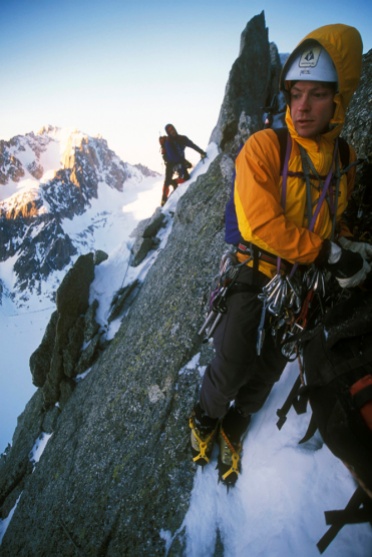
Which reminds me…one year ago right now I was at an incredible adventure cragging area called Frey, near Bariloche, Argentina. (And now I’m in Cody, Wyoming, about to get cold, wet, and scared ice climbing…nobody thought it possible, but indeed I’m dumber than I look.) We climbed for five straight days, amazing rock, and on our final day my friend Morgan Boyles and I climbed one of the best rock climbs anywhere: Siniestro Total. Nine pitches of perfect granite, cold in the morning shade, chilly at some belays, hard enough that you didn’t want to climb with a pack. I had a prototype Nano – it’s the yellow thing in the photos, packed down to nothing and super light clipped to the harness, then good enough warmth for belays, and trim enough to climb in. So good, ahhhh, Frey. Shit, anybody know if they have direct flights from Cody to Bariloche?

The Flute

•January 26, 2010 • 6 Comments

This one’s a reprint, but I can’t think of a better way to re-say it. It first ran this summer, on a site we used to do called the Alpine Briefs. Time slips away, time is precious, and I can’t keep up. I’m about to head to Cody, Wyoming, with my friend Justin, who’s on a big road-trip from Whitefish, and then to Bozeman to hang with old friends, including some of my first climbing partners. Such things are important, I think. More important than the work that’s piling up right now (I’ll try to pre-load a couple of blog posts, though – I know we’re falling behind in the margarita department).

Jonny Copp, one year old, with a holy man in India. Painting by Janet Guenther, from a photo by Jonny's parents.

I can’t stop thinking about Jonny. Maybe this evokes the cliché “can’t let him go,” which may be true – I know I’ve already mentioned how his loss shook me, and I still have a picture of him sitting here by my desk. Been meaning to put it somewhere since the memorial in July, but can’t bring myself to do it. I like having him here, I like looking at him, talking to him. I have Janet’s incredible painting of Jonny on my wall, and it moves me in ways I can’t describe – thank you, Janet.

He’s gone, I know. They say time heals, but I don’t ever want a day to come when I no longer miss him.

On our Alaska trip in 2003, Jonny gave me a book called The Crossing, by Cormac McCarthy – I’d never read any of his work before, and he’s become my favorite author. There’s this passage on p. 288 that I can’t forget. But that’s OK, I don’t want to. The main character, a young boy wandering through Mexico, had come across an old sepulturero, a person who works with burials.

“It was the nature of his profession that his experience with death should be greater than for most and he said that while it was true that time heals bereavement it does so only at the cost of the slow extinction of those loved ones from the heart’s memory which is the sole place of their abode then or now. Faces fade, voices dim. Seize them back, whispered the sepulturero. Speak with them. Call their names. Do this and do not let sorrow die for it is the sweetening of every gift.”

Here’s that reprint:

***

Of all my friends who live their lives, I never thought that he would die. And even if he did, he would surely rise like a Phoenix and keep on living.

We last climbed together last summer—life gets busy, I guess—and not much had changed, with our usual late-start junk show reminiscent of past airport and random travel fiascos. By mid-morning we stood in the Chasm Lake Cirque.

“What should we climb?”

“Maybe something up there? We’ll figure it out,” came Jonny’s characteristic reply.

Strong as hell. Good at everything. Wild eyes that burned with life. A mystic who embraced the unknown and unknowable. The best hugs. Huge, toothy grin. Without a doubt the partner you wanted if—when—shit hit the fan. He’d just laugh. The greatest laugh. He had an unrelenting optimism. “Nah, I think it’ll work out!” seemed the most common phrase when we climbed (notwithstanding our endless stream of inside jokes)—and it usually did work out.

Seems that some partners give this unspoken gift that, just by being with them, somehow makes you better than you thought you could be. And then, sometime before you even really know it, you begin believing in yourself.

As we racked up among wildflowers, I saw what looked like a weatherworn dowel hanging from his harness.

“Dude, what in the hell is that?”

“It’s a flute!” he said, and kicked steps up the snow toward the wall.

Oh, well, of course.

I tried my best to mock the hippie flute, but I got quiet when the crux randomly came on my lead. This is too hard for me, I thought. But I knew he’d tell me to try, and I knew he’d be right. Toward the top of the pitch, as notes drifted upward from the belay, without even realizing it I danced.

Now he’s gone. They are gone. Some things are too big, too powerful and there is no Santa Claus.

Later we console ourselves with talk of inspiration and memories, and how the ones we lost wouldn’t want us to be sad. We whisper wistful “if onlys,” but it remains undeniable that the risks were part of the person, as all of our experiences make us who we are—that the close calls and willingness to go came with the love and laughter and joy and inspiration, and you can not go back and remove one component from an integral whole. It was him. All of it.

Higher, he saw a chossy corner: “Let’s head up that!” We’d find another way to return to our packs—it’d all work out.

Now I struggle to believe that everything will all work out, but I guess it has to, somehow.

Last week I returned to the cirque. While kicking steps up the suncupped snow as firey alpenglow bathed the rock, I stopped. I looked everywhere, studying the air and the wind and the rock, and though Jonny didn’t rise from the ashes, I still heard the sounds of his flute.

Jonny Copp playing his flute in the Chasm Lake Cirque, summer 2008.

Media Review: Outside Magazine, Freelancing and the Case for Digging Ditches

•January 21, 2010 • 13 Comments

We all know that shifts of the shaft happen with work and business: budget cuts hit, people drop the ball, tough decisions sometimes short-change good folks. And in the big world of politics, banker bailouts, Wall Street’s house of cards, sickening insurance industry practices that place profiteering over people, war-for-profit, and the list goes on, we often want to tune out and run away. To again quote the great Walter Sobchak: “Fuck it, dude, let’s go bowling.”

Such escapism into something that feels organic and real is part of the allure of climbing and getting outside. And so it’s doubly ironic, and perhaps doubly insidious, when a company that purports to be all about the outdoors treats people like dogs.

Outside magazine should change their title. That’s nothing new; they’ve long since drifted from their good content days and into 10-steps-to-flatter-abs articles, fashion shoots, bogus celebrity covers, and sub-Maxim gutter humor. But do they really have to be so abusive to their contributors? Abusive is the term a friend, who formerly authored Outside’s all-time best monthly column, uses. Another climber and writer acquaintance, the rare writer who has ascended well past needing to write for magazines, refuses to ever again write for Outside. Media Bistro recently reported on their despicable treatment of their freelancers.

So why do people do it? They grovel with the other jackals, picking over meatless bones in hopes of furthering their careers. Writing is hard work, and the pay sucks. So you hope your work gets seen by a bigger audience, which, ostensibly anyway, leads to better work, perhaps a book deal, and the promise of earning a good living. Understandable enough. Except when they treat you like dirt and your work doesn’t see print in any case. Many very talented writers and photographers give up and find another career. Smartly enough.

I learned my lesson with Outside awhile back, after they kept milking me for climbing-world information, then stringing me along on my article proposals, some of which later became articles written not by me but by their pet writers (if you didn’t get that, it’s something they’re well-known for doing: stealing your ideas, only they wouldn’t put it that way, and you can’t really prove it, and who has the money to pursue the case?). When I stopped trying with them, I wrote to one of their editors: “Hard though it may seem to believe, I do have some self respect.”

When they recently abused a good friend, I got pissed again. Synopsis: my friend, a great writer and editor (it’s how he makes a very modest living) and climber, and a genuinely good person, wrote a gripping personal article, submitted it to Outside on spec, had it contracted and photographed, and assumed – as one would – that the magazine wanted it and it would see print. The topic was deeply personal, exposing his crippling, years’-long withdrawal from psychiatric medicines, as well as the false diagnoses and forced poisonings that nearly ended his life and climbing career. My friend is dark but not crazy, and he went through a hell beyond most of our imaginations. Outside told him not to send the piece to anyone else, and my friend even agreed with them, when another magazine expressed interest in the psych-med topic, to keep any first-person narrative out of this piece so as not to jeopardize the original story. This was three years ago. Then they started stringing him along. Constantly. Last summer, he was promised (again) it would run April 2010. Then radio silence. When my friend checked in two weeks ago, he was again brushed off, until finally another email and phone call roused a response…of sorts: perhaps the ninth or tenth such volley of ex post facto apologies and empty promises from an editor seemingly too busy covering his ass (and daydreaming about which baby oil to drizzle on Lance Armstrong’s pecs for the next cover shoot) to engage in, well, editing or communication.

At a certain point, perhaps it’s my friend’s fault for being good enough to keep believing their bilge. But really, there is no excuse for Outside’s despicable behavior. It’s not like this was an isolated case, either.

“You know what the problem is?” my friend told me earlier today. “You shouldn’t shit where you eat, and that’s what trying to make a living is with magazine writing, at least with these guys. And then they try to make it look like they were doing me a favor with my piece, pulling it out of the garbage-heap, their ‘slushpile.’ It’s like someone holds you down in a corner and rapes you and then says, ‘Look what I did for you – I showed you this wonderful corner.’”

There’s something to be said for just walking away, and I suppose this helps explain why so many great artists are starving artists. And let’s make no mistake – Outside has nothing to do with art, and they haven’t for a long time. The editor made it sound like he couldn’t do anything, maybe true but after three years, and a history of abusive practices, it’s hard to comprehend any defense for them. It’s certainly somebody’s fault. At any rate, the paradoxically titled Outside provides a stunning example of how to dehumanize contributors, who are often those closest to the lifeblood of our passions.

As so much of the world becomes dumbed-down soulless corporate rot, and as the talented get fed-up and walk away, I wonder what happens to creativity, writing, art, music – then again, it usually finds its way to the surface in smaller outlets, the artist digging ditches by day and creating at night, remaining poor but with his soul intact. That, at least, is a good thing.

I hope his article finds a good home.

On Adventure – 1 (Backyard World)

•January 18, 2010 • 2 Comments

I’ve spent a lot of time gazing into my navel and pondering the meaning of adventure in the last couple of years – perhaps as I get old and soft and gray I wonder more. Perhaps my eyes are gradually opening to the world and the various ways we approach life.

As for sheer unmitigated adventure, I’m sure we can all agree that little can compare to Ernest Shackleton’s 1914 mind-blowing epic journey to Antarctica. One of the most abso-fucking-lute badass adventures of all time. Reading the amazing story in Alfred Lansing’s book Endurance: Shackleton’s Incredible Voyage, a read that you should not miss, left me slack jawed, with shivers on back of my neck, and realizing that I – and everybody I know, including the most badass climbers – are all complete and total wussies.

But few things in this world exist in black and white, and I believe adventure exists on a spectrum.

To a child, for example, the entire world holds potential for adventure. Everything is new – the ultimate beginner’s mind. Who guides that potential, and how?

My friend Jason Albert knows adventure from a variety of angles. He was my first steady climbing partner, some 15 years ago, and, as I alluded to in my article in Alpinist 28, the very fact that he put up with “Sketchy Kelly” shows he had a tremendous sense of adventure, though I’m grateful that he drew the line and refrained from his fully justified fantasies of putting an ice axe through my head (“Hey Kelly, look over there, it looks crazy burly but I’ll bet you can climb it!” Thwack!). He’s an active and experienced outdoor athlete, and nowadays his biggest adventures come as a stay-at-home dad.

In a recent Cleanest Line piece, “Backyard World,” about guiding his young boys through adventures close to home, Jason puts it powerfully and eloquently: “My adventures now are at once more complex, subtle, and wrapped in penetrating challenge. The challenge is to make close-to-home adventure the real deal.” He also wrote an excellent article, The Big Red Island, about a year spent living in Madagascar villages (his wife does ring-tailed lemur research) with their then two-and-a-half year-old son.

Anyway, here’s to adventure in its various forms, from cradle to grave. Click on Jason’s terrific narrated “Backyard World” slideshow, embedded below (if it works; if not, click here for the original site; embedding this taxed my tech skills beyond previously known levels – also, I don’t know how to make the “play/pause” buttons appear, but just click on the image to start playing, and click again to pause). It’s only two minutes long, and worth every second. That’s what she said.

Enjoy.

more about “Backyard World“, posted with vodpod

A Face, a Butt and Jay-Z

•January 14, 2010 • 20 Comments

The North Face could learn something from the rapper Jay-Z.

Back in 2004 someone calling himself Danger Mouse made an unauthorized mash-up album, combining lyrics and beats from Jay-Z’s The Black Album with background samples from The Beatles’ White Album. Recording industry giant EMI, who controls The Beatles’ work, flipped. I remember an interview with some corporate lawyer guy blathering about abominations, wanton disregard, the fullest extent of the law and capricious blahblah freakin’ blah. Then they interviewed Jay-Z, who – well, I’ll get to his reaction.

Anyway, a St. Louis teenager, Jimmy Winkelmann, recently started a small clothing company as a joke. He called it The South Butt, with the tagline, “Never Stop Relaxing” – playing off The North Face and their tagline, “Never Stop Exploring.” He’s got a funny little disclaimer on his website, ending with “If you are unable to discern the difference between a face and a butt, we encourage you to buy North Face products.”

Cute, worth at least a chuckle, harmless. The kid hasn’t done any damage, hurt our collective resources, endangered others, etc. But has he, somehow, damaged TNF’s image? I doubt it. TNF seems to be doing a fine job of that on their own.

The seven billion dollar company, owned by the mega VF Corporation, is suing the kid in court. C’mon, guys. Seriously?

Unlike the music example above, it’s not even clear that young “ignorance of the law is no excuse” Jimmy infringed on TNF’s rights – he has an original name, and a different, albeit somewhat similar (as if no such similarities exist elsewhere in the business world), logo. Besides, satire and parody are protected forms of free speech.

Not surprisingly, the tiny South Butt’s business has exploded since TNF unleashed the dogs.

“It’s pretty much just amazing, but it’s all thanks to The North Face, I mean, them suing me – well, first threatening me was, like, a huge gift, and then when they actually tried to take me to court it was, like, the best Christmas present ever, huhuh,” that dastardly Winkelmann kid said in a classic TV interview – check it out.

Even if TNF/VF’s high-powered law team succeeds, or they bury the kid in legal fees, why? Why turn a moderately challenging situation into a PR nightmare? The longer this continues, the more they make themselves look greedy, humorless, and out-of-touch, even bully-like. For a company with a great athlete team, a great history, and who donates to many good causes, I think they’re screwing-up on this one.

Surely they’ve got sharper minds on board than this, no? Maybe they could adopt a sense of humor and figure out a way to have some fun with it. Who knows, maybe some overzealous exec who’s never gotten off his, ahem, South Butt, is getting chewed-out right now for being too uptight and they’ll change course tomorrow and drop the case.

The kid in TNF's crosshairs.

Better yet, they could turn it into something positive. Come out with a statement that sounds like a real person (don’t let anyone who wears a suit and tie write it) who’s coming to the realization that they’ve gotten a little off track and overreacted – we’ve all been there – and make amends, call off the Hounds of Hell, and donate what you’d spend in legal fees to some great cause. Heck, do it with the kid on-camera in a loving embrace with his parents (“Oh thank you, thank you, for not taking my parents’ home away from us!”), maybe some pretty flowers and some puppy dogs frolicking (just don’t mix-up the cages and accidentally unleash the Hounds).

Or simply be cool about it. Take a hint from Jay-Z, who appears to be wearing a TNF Snorkel Jacket in some of his older videos. When asked what he thought about Danger Mouse’s mash-ups of his raps with songs from the Beatles, his response was very un-EMI, un-TNF like. He replied, “I think it’s fly.”

Training – 2

•January 12, 2010 • 2 Comments

Wharton’s win at the Ouray Ice Comp got me thinking about things I already knew. After some cragging with him and Brian McMahon – Josh and Brian did the awesome first ascent of The Flame, and then a new route on Shipton Spire a few days later, in Pakistan in 2002 – Brian and I got to talking. “Josh has always been bolder than me and he’s always been a good technical climber,” Brian said, “But he’s gotten so much stronger and better it’s amazing.” We’d just watched Josh cruise 5.13s in Eldo; we’d both been on the other end of the rope with Josh on huge alpine climbs; and about 10 days later Josh won the Ouray Ice Comp. Absolutely awesome, and Josh, also a terrific human being, has earned every bit of it. Brian’s words could have been my own, and I nodded my head and smiled. Josh not only climbs a ton, but has really upped his game from training his ass off. Training works.

Josh campusing at a lunch stop on the drive to Askole, on our 2004 Pakistan trip.

Through pushing yourself, you make what feels hard now seem easy later – both in fitness and in technical climbing. Gains happen both physically and psychologically. For trying to be a complete climber, I’m talking about going long when you’re building up to mountain-day fitness (I mention a bit about my different phases or times of emphasis in my initial training post) – when, after awhile, eight, then twelve, then fifteen hour days feel reasonable. And then doing them consecutively, which would wreck you previously, suddenly feels reasonable. Talking going hard with intensity of training sessions, pushing yourself through lung-busting and muscle-searing intervals. I’m also talking about pushing on more difficult climbs.

The latter has long been my weakness. We tend to focus on the things we already do well. It’s hard to step out of that comfort zone, swallow your pride and push into realms where you feel like a total rookie. For me, that means harder technical rock climbs. And, for sure, what’s hard for me is cake for some of my friends. But that’s OK, we all have our limitations, and good climbing and training partners help and support you while you improve. I’m lucky to have such good friends.

And the time demands can be rough – I don’t get paid to climb, and my work deadlines pile up, sometimes slip, I hit most and beg for forgiveness on others. But climbing is a big priority for me. It keeps me sane and I love it. Even more than margaritas – but a good Corralejo Blanco marg sure tastes fine after a hard day of training. I digress…

Scotty D, my longest-running climbing partner, sending his 5.13 project in Lyons a couple summers ago.

Anyway, yeah, I’m decent at running up 5.easy fast, and I tend to move OK in the mountains. But by finally forcing my sorry ass to climb harder as part of my training, not only does it open-up more climbs to me by expanding my skill, but suddenly my perceptions of 5.easy shift. Just like with the fitness training – you make what feels hard now seem easy later.

My late friend Micah Dash made an impression on me after his trip to Trango Tower (often called, incorrectly, “Nameless Tower”), next door to Great Trango Tower, in Pakistan. He, Nick Martino, and Renan Ozturk blazed up the 3,000 feet of hard technical rock climbing in a mind-blowing 12 hours, but retreated on the easier ice and mixed ground leading to the summit. Though bad weather had moved in, Micah, refreshingly, dismissed the obvious excuse when we talked and told me that they simply weren’t comfortable enough on the icy stuff to motor up it. I was amazed, given how they smoked the rock. It reminded me of a couple of things:

1. We all have our areas of expertise and our areas of weakness.

2. Our weaknesses are what hold us back.

3. It takes a strong person to address those weaknesses.

And so it inspired me when Micah returned from that trip and worked on improving his ice and mixed climbing – he wanted to be an alpinist, not just the excellent rock climber that he already was. He didn’t just talk about it, he made it happen – no excuses.

*****

Below is my poorly detailed training log for the last 10 days or so. This would be a cruise for some people, harder for others – it’s important to individualize your training. Right now I’m working on high intensity fitness and skill development (“What skills do you have, Napolean…”) while keeping an eye on how I feel so as to avoid injury. Maybe some of this will give some ideas for your own training. I’m happy to explain my notations and abbreviations, and anything else.

12/31/09            climbed that ice/mixed thing out at Rock of Ages with Mark Kelly. Exc little outing (about 6 hrs CTC), good to remember how to do the sketchy stuff

1/1/10                  trail run/pwr hike with pack into Eldo the back way (i’m a cheap bastard…) — maybe 45 min? go to Rincon wall to meet Josh and Brian. Just a little climbing, but some hard – TR work on Evictor (12+ R – I excel at top-roping R-rated routes….). damn, doesn’t take much of that to work me.

1/2                        easy day. Dry Tool system board/bouldering, 5′ w-u on board, then 2:30″ on with :30″ rest x 4, w/ 7.5, 12.5, 7.5, 0 # added. Also did 10′ finger board workout – great time efficient stuff from Metolius – modified (made easier) advanced one.

1/3                        ski tour in Park w/ Jenna, ~3.5 hrs RT. Great day.

1/4                        intervals on Gem Lake Trail (steep run), to some specific landmarks I have (for first 2 intervals). Snow/ice made footwork tricky. 5:18 on (run hard as can), 2:40 off(rest). 5:36 on, 2:30 off. 5′ on, 2′ off. Then 3x:30″ on, 15″ off. HARD. Then easy/short dry-tool bouldering at gym on way home.

1/5                        climb at Rincon Wall, cold, but got on hard stuff (incl TR work on Evictor again…suddenly seeming maybe possible eventually…). Ended up being good day. With Brian & Kierra, Tommy & Becca, and Jenna.

1/6                        much needed rest. Getting back into training hard and trying to climb harder tires me out. Intensity is everything.

1/7                        ski tour in park, 1 hr, good aerobic pace. Then to Rod’s Gym (our local garage gym; Rod Willard’s old place — props to John & Patti Bicknell for keeping it Rod’s Gym), did good warm-up with weights and body wt exercises, then high intensity circuit:

3 rounds (no rest between exercises or rounds, going as hard as possible) of:

1. (clean barbell from floor into:) 10 Front Squats, 10 Lunges (5 ea leg, alternating), 10 Push-Press; w/ 60-70# BB (not sure how much our bar weighs; I’m about 142#)

2. Turkish Get-Ups, 40# DB, 3 each arm

3. Air-Dyne sprint 1.5 km (not calibrated, but takes like a minute or so? RPMs >90; if dip below, then penalty sprint to >95)

12:38 (shit, I think; forgot to record my time) — Freakin’ hard by the end. work up to 4 or 5 rounds = brutal.

Then to rock gym, about 6 pitches up to 11+ (mostly easier; tired). good day.

1/8                         quick ski tour with Tommy at Hidden Valley – about 45 min uphill, exc little workout, solid pace (with him, of course…)

1/9                        Quarry Wall in Golden with Paul Gagner – moderate uphill approach. Then 7 pitches, 5 @ 5.11 or more. Good stuff for short day. OS attempt @ 11+/12- crack, one leader fall. Fell once on each of 2 5.12 TRs. Close.

1/10                        feeling total body fatigue and specific upper body fatigue. But will rest Mon for big-ish climbing day Tues, so did hill running intervals. 7 x 2′ on/hard, 1′ off/easy

1/11                         great day of rest. Climbing tomorrow.

Media Review: Alpinist 29

•January 8, 2010 • 12 Comments

Flowers. Beautiful flowers. So many times I thought of those and what they meant, what they represented, while reading Jens Holsten’s article The Heart of the Day, in the latest issue of Alpinist magazine. Holsten, a young (20-something) alpinist from Washington’s Cascades, takes us through his incredible trip to Alaska with Max Hasson, while also giving us background on his devotion to living in the dirt and making it happen, and a beautiful glimpse into his love for his dying mother.

Damn, Alpinist does a terrific job. I’m a fan of climbing writing and climbing stories that extend well beyond the “and then I put the yellow TCU here and…” bullshit, or the thinly veiled thumping of one’s own chest, and the omnipresent hyperbole. We’ve got TV for that shit. Endless this-will-make-you-cool gear reviews, fashion shots, and pop-culture celebrity covers don’t do it for me, either. We’ve got the paradoxically named Outside magazine for that.

I think that what Alpinist, and all good climbing writing, does so well is to unwrap the deeper threads that draw us together, things shared throughout life despite the different shades within our obscure craft. It’s timeless, but that doesn’t make it old. Sure, we all know “it’s about the experience,” right, right, blah, blah – but when it comes to communicating that through storytelling, it’s damn difficult to do well, and extraordinarily rare to do extremely well. Too often, I think, we fall into the traps of clichés and predictability, miss the line between overly stoic and mawkish, and give in to summary-statement endings (my personal pet peeve) that ruin the article. Side rant: I think that sentences containing “and then I realized that it was…” (so much for “show, don’t tell,” eh?) or “in the end, it wasn’t about the climbing,” and their various devil spawn, should be now and forever banned from the printed page. Not that I’m in any position to criticize, granted.

To drift a little more, there must be something intrinsic to commitment that lends itself to great storytelling, which might explain why, unfortunately, virtually zero good literature exists about sport climbing/bouldering/cragging – not trying to rip on those crafts, fun as they are, utterly mind-blowing athletically at the high end, and much as I enjoy them. It seems it should create some good lit, though – unless I’m just missing it (along with the longtime climbing historians and literature buffs, and the book festival jurors) – surely similar attributes and drive exist among the dedicated. Hell, people live in their cars, make huge sacrifices, get maniacally obsessed with a little chunk of obscure stone, all in order to clip bolts and do boulder problems. Why the lack of great writing? Surely they’re not all illiterate. Hell, brain-damaged alpinists manage to write historically great mountain literature. And baseball – baseball! It doesn’t get any more boring than that – has great literature. One of the best sports books I’ve read is Levels of the Game, by John McPhee. It’s about a tennis match. I hate tennis. Loved the book.

Anyway, I don’t know why the dearth of quality, memorable, lasting sport climbing or bouldering writing, but I think we’re poorer for it. Unless it’s just me missing the boat – fire off your thoughts and theories, I’d love to hear ‘em. I have, however, to prove my point that cragging and great writing shouldn’t be mutually exclusive, heard wonderful things about Jerry Moffatt’s (co-written with Niall Grimes) recent award-winning book Revelations, perhaps one of the first ever great books about short-form rock climbing – but that’s just it, it sounds like it’s not actually so much about climbing, any more than, for examples from Alpinist 29 (I haven’t read every article yet), Jeff Benowitz’s article is about a busted leg (he’s one helluva storyteller and writer, for those unfamiliar with him), Majka Burhardt’s about just ice climbing, or Andrew Querner’s about another perfect-body-posed photo essay.

Anyway, I love the issue and Holsten’s article, with the glimpses of his journey through his early years, striving, dreaming, then reaching a goal you’ve dreamed of for so long that it feels like it isn’t even you, but layered with the complexity of losing his dying mother far too early, her struggle, his youth and dreams, and the compassion of a terrific climbing partner, Max Hasson. But, fair warning: If you need to know the move-by-move and pitch-by-pitch description, complete with ratings and machismo in describing one of the best trips of the year by American climbers, you’ll be disappointed. Not me. It has what I consider a trademark characteristic of good writing in that not only must you continue reading, but it’s not over when you finish the final word. The best writing keeps me thinking for hours, days, or even longer after I finish. It evokes lasting feelings and often makes me think of things beyond the story. Like flowers. How flowers change, adapt, shift form, wilt and die, bloom again and come alive, and show us simple beauty much like the beauty of life.